Integrated Development Ecosystem
Dedicated enterprise suites represent the primary paths for adopting and evolving our architecture, but they are not the only way to build on top of it. These three development tracks are designed to support external software integration, allowing teams to extend capabilities, embed intelligence into their own products, and create entirely new solutions that remain aligned with the core suites.
Compatibility, supported features, and version alignment between these suites and integrated applications are continuously documented and updated in the technical documentation and release notes.
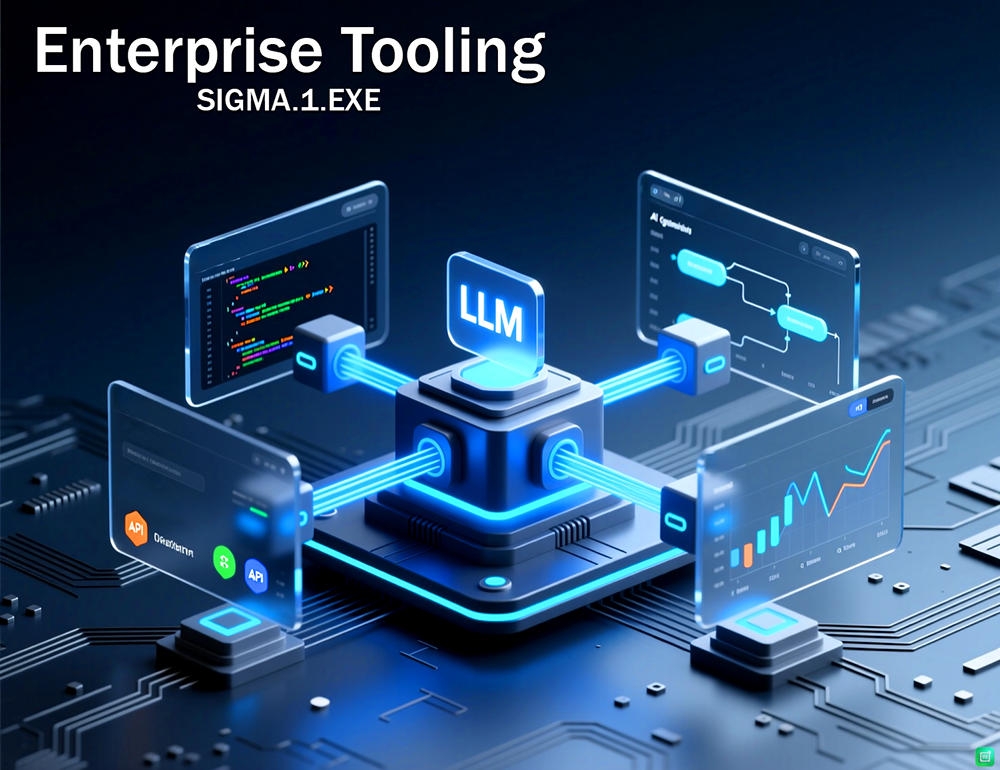
While the three primary paths below represent our core architectural pillars, they serve as a foundation for a much broader spectrum of possibilities. We provide a dedicated resource layer for each solution, enabling the development of sophisticated external applications through multiple integration vectors:
Dedicated API Access:
Interface existing systems with our modules via high performance endpoints. While sharing a unified core, each solution provides specialized functions and methods tailored to its specific operational domain.
LLM-Powered Generator:
Deploy independent, high-performance solutions using our autonomous engine. Gain access to optimized libraries with full support for mobile, web-based, OS-independent GUI, console, and smart device environments.
Reference Implementations:
Accelerate workflows with source available, ready to compile example applications. Designed for deep modification, these templates provide a head start for custom business logic and UI requirements.
Our solutions are not standalone scripts: they are integrated applications running within the AILOJZ Orchestrator Environment.
This ensures that every tool from enterprise workflow automation to personal companions benefits from centralized security, shared memory context, and the deep emotional intelligence of ANIXAI.
AILOJZ manages the "heavy lifting" (resources, security, API routing), allowing these dedicated solutions to focus purely on business logic and data human (user) interaction.
The result is a unified AI ecosystem where intelligence, emotion, and execution are aligned by design integrated by default, modular by intent,
and never forced into isolation unless it serves the system (scaling or controlled separation when needed).